Trees growing in the landscape face unique challenges. Often confined or living in inhospitable soils, tree roots can be found at the source of many issues. Below are some examples of tree problems involving roots.
Heavily compacted soil and improper planting cause problems with tree roots.
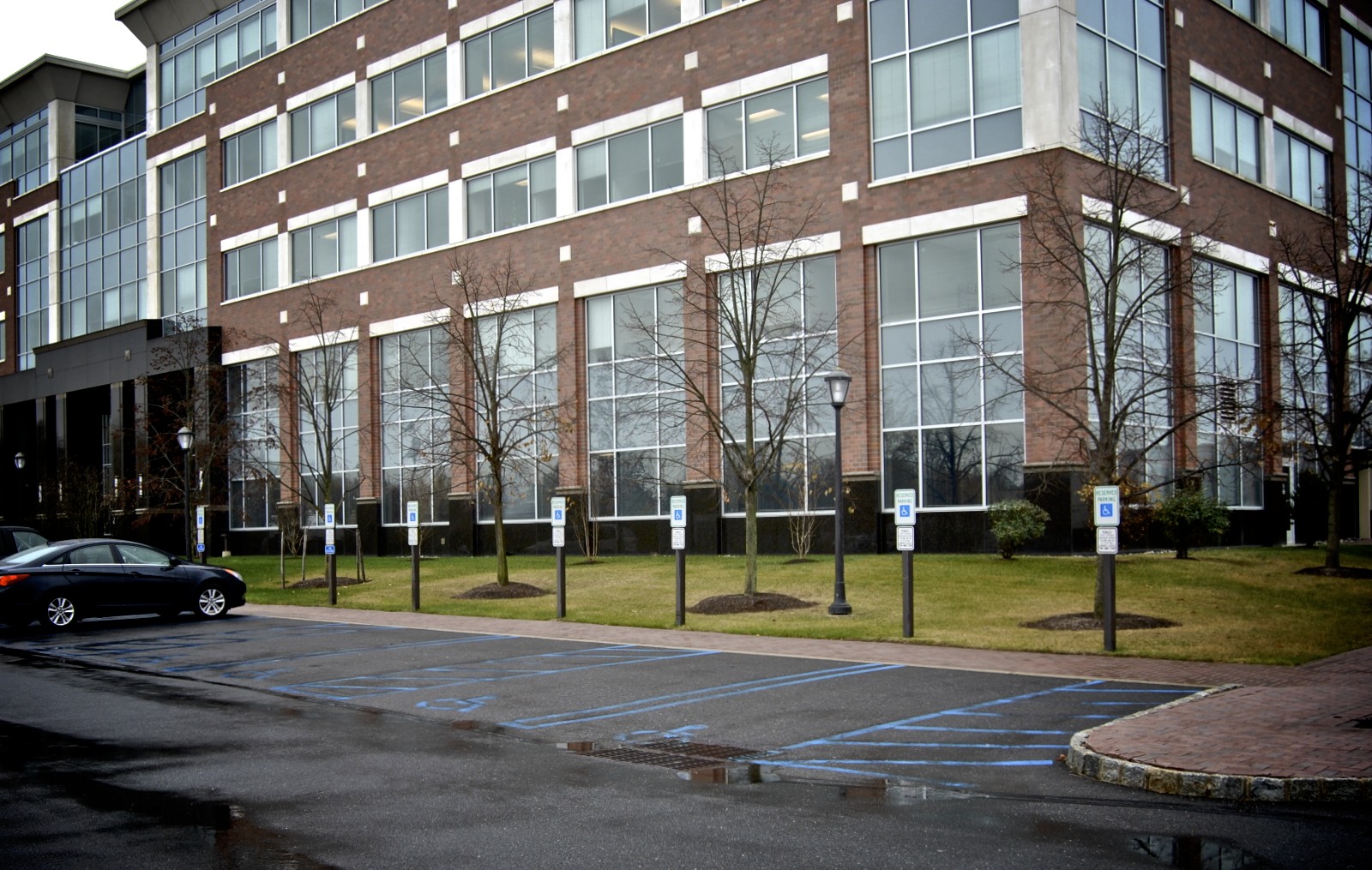
A beautiful executive building that has been having tree problems.
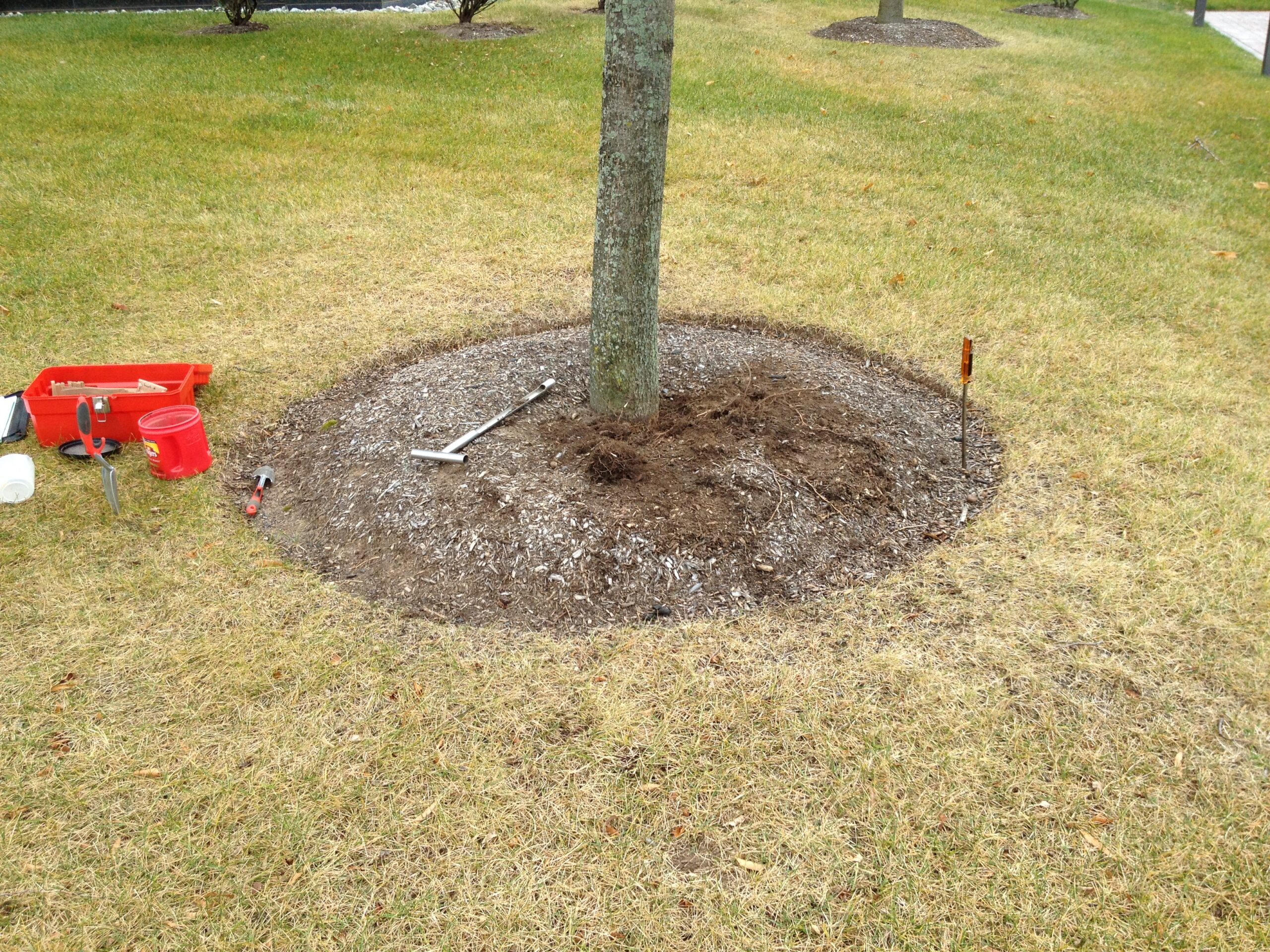
A closer look at the base of one of the subject trees. Note the lack of a discernible root flare.
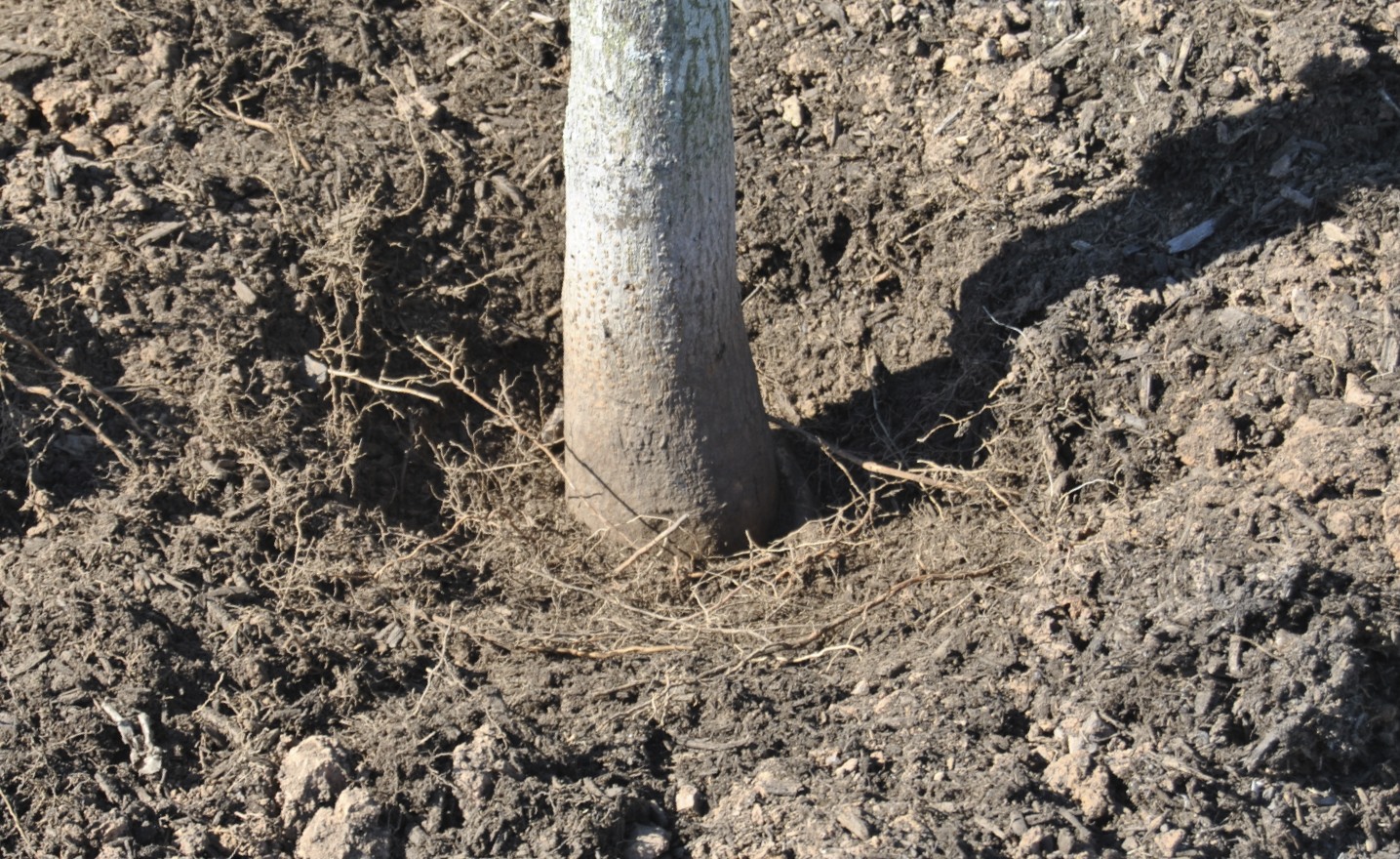
Careful excavation using hand-tools revealed numerous fine roots near the surface.
Excavating to 6-8 inches did not reveal the root collar.
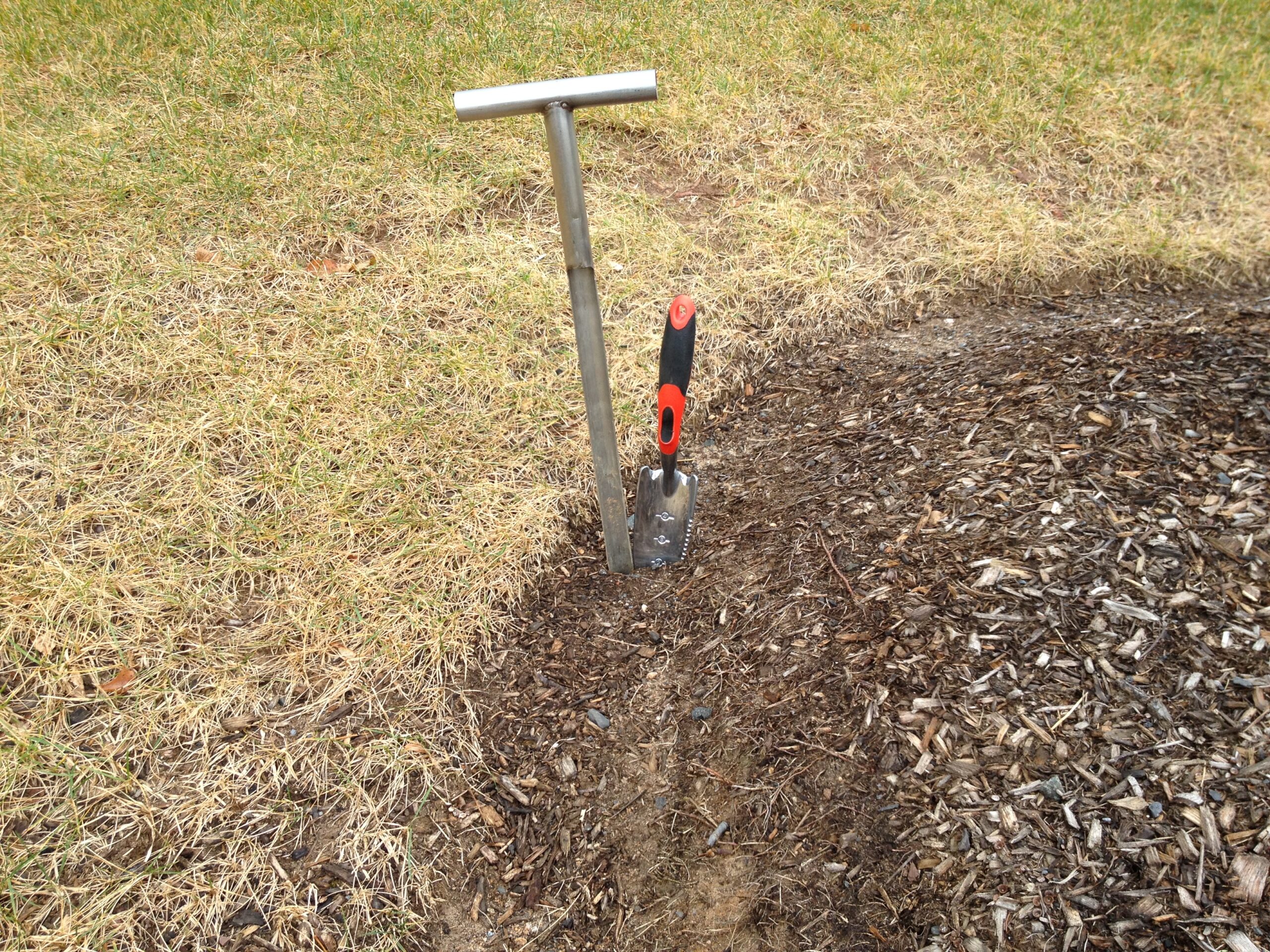
Just outside the mulch, penetrating the soil required significant effort. Using one’s bodyweight provided negligible results (1-2 inch depths).
Poor planting and mulching techniques often shorten the lifespan of trees.
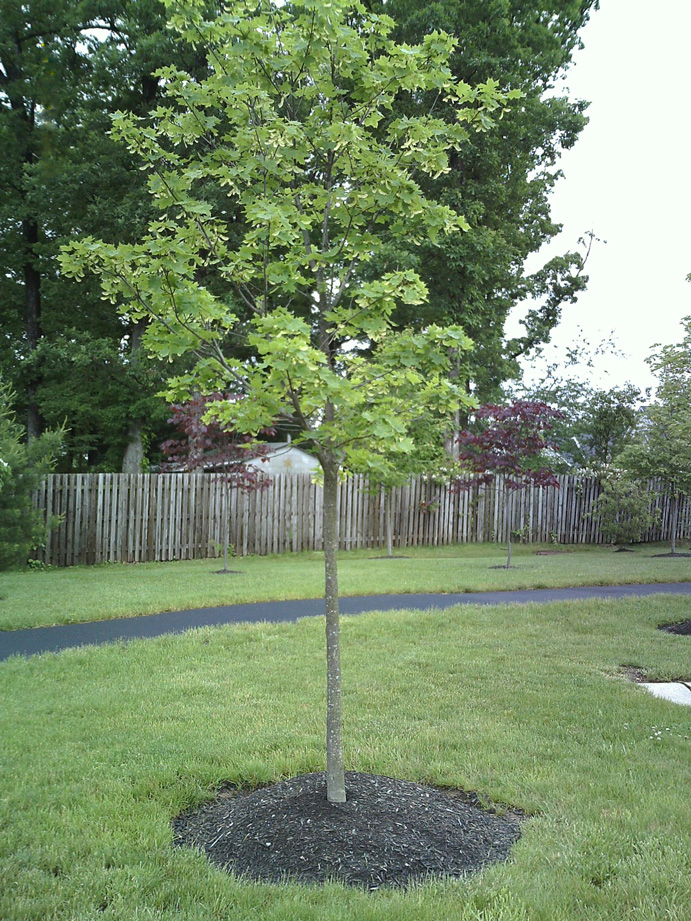
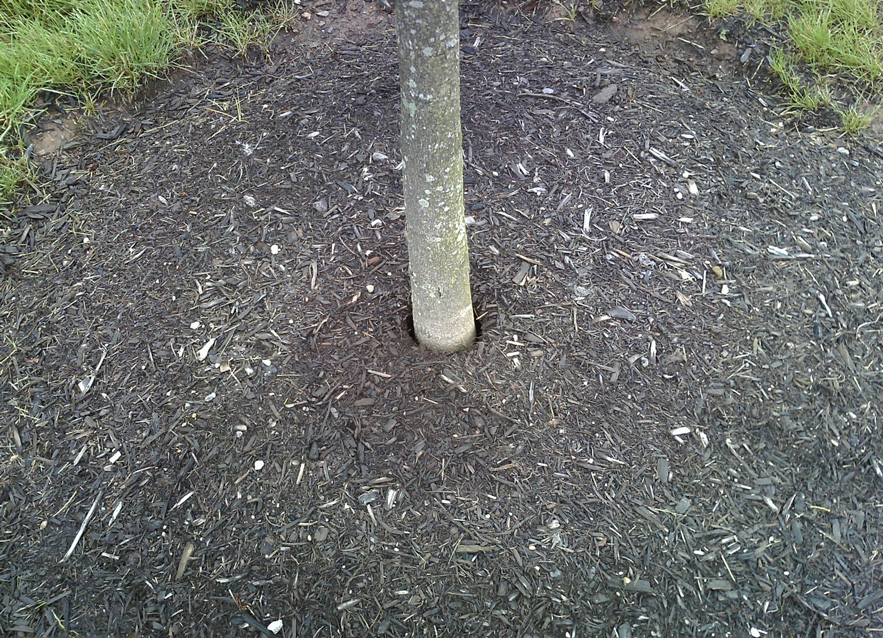
Nearly all the trees within this development were planted similarly to this maple.
A closer look at the base of the maple. Note the lack of root-flare as well as the gap between the mulch and the stem (a textbook symptom of planting too deep).
Removing the mulch, followed by careful excavation revealed the root-flare was well below grade.
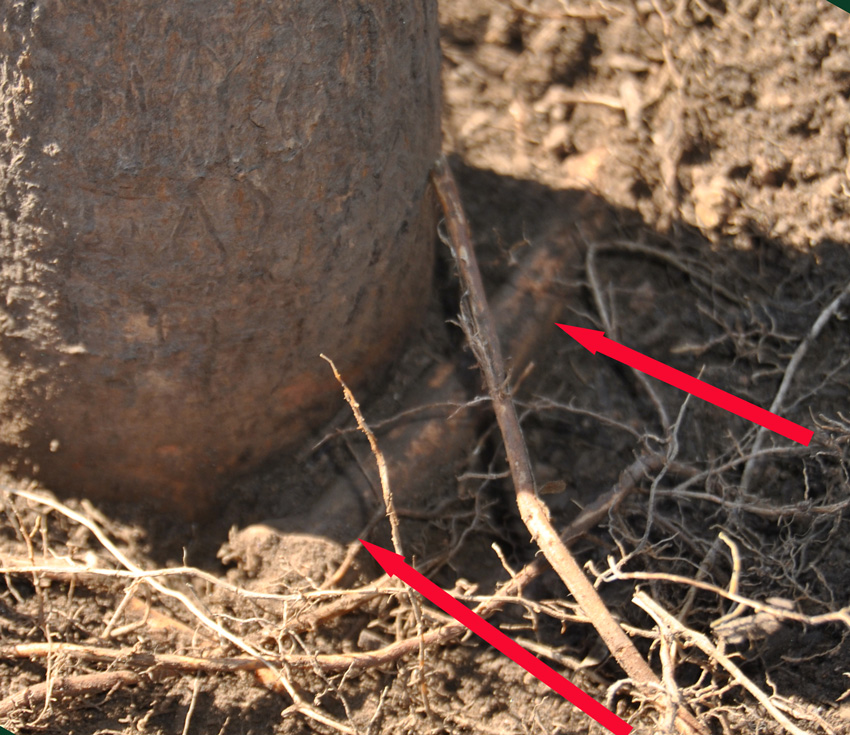
A closer look showed tree roots that will likely girdle the stem with age.
Heavy clay soil can limit root development in trees, increasing the likelihood of wind-throw.
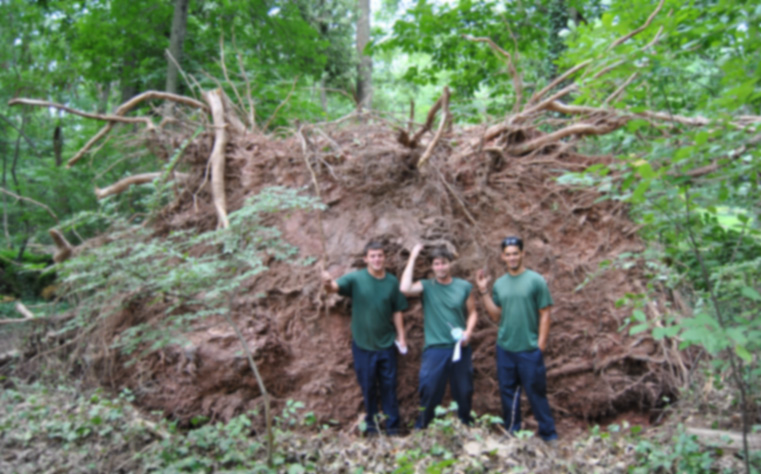
This 70 ft. white oak from a neighboring property failed during a thunderstorm (despite partial protection from surrounding trees).
The uprooted stump from the white oak. The roots of this tree were relatively shallow, growing near the surface of clay soil. (In the foreground: Tree crew kind enough to stand-in, providing scale to the-root plate)
Excessive pruning removes a tree’s food-supply, which can lead to underdeveloped roots.
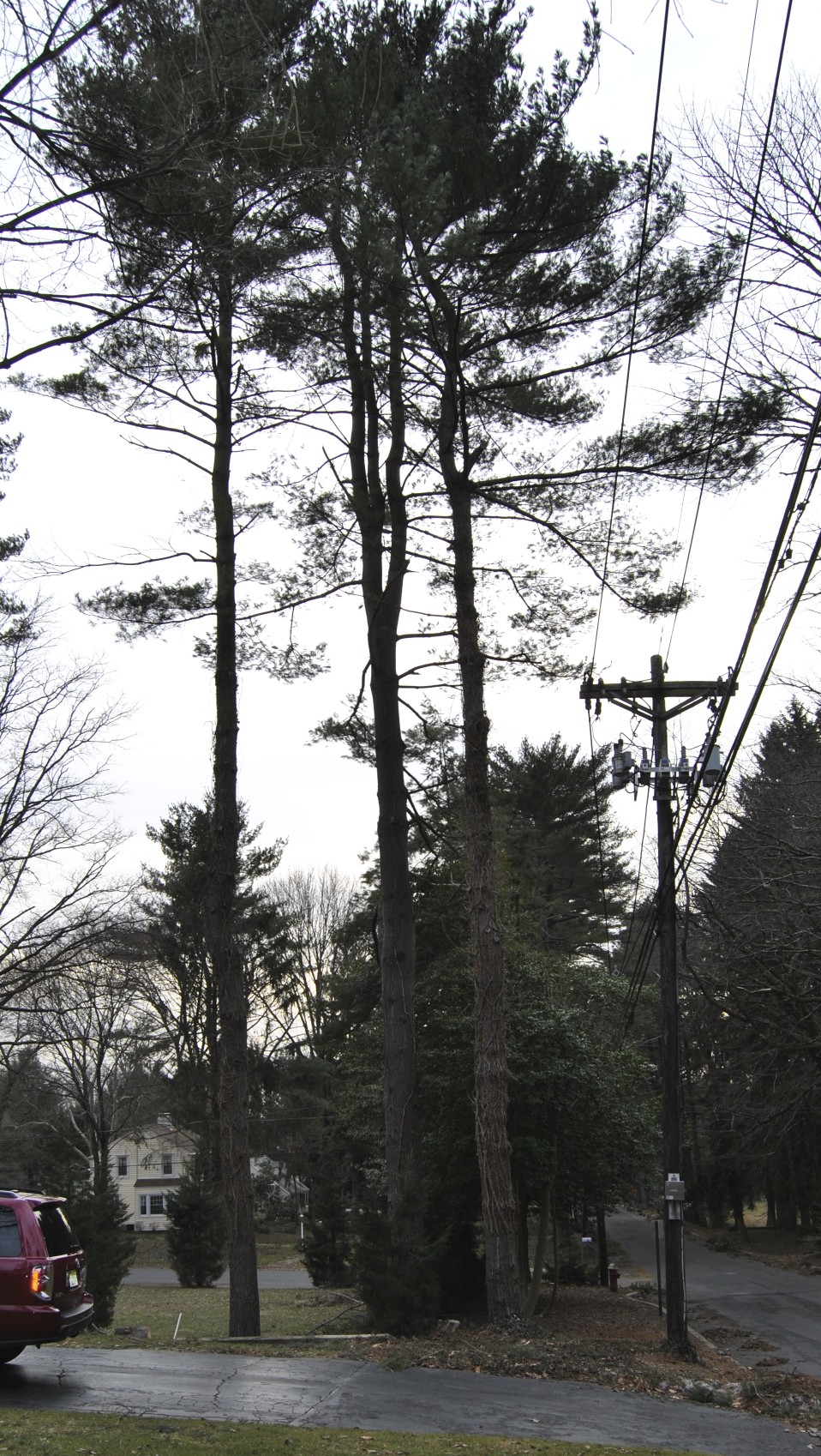
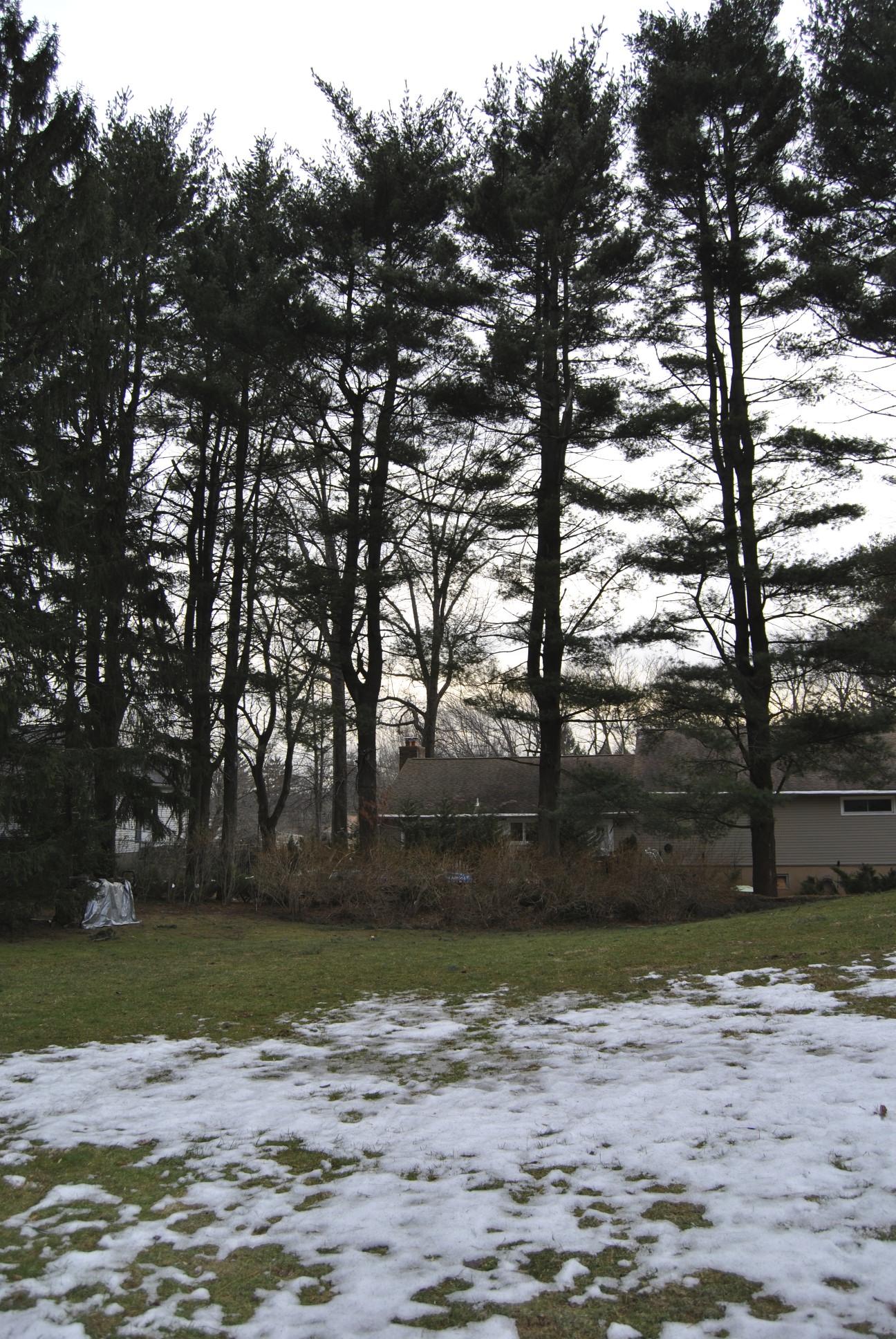
80-90 ft. tall white pines in this row started to catastrophically fail during seemingly mild wind conditions.
A distant view of the pines showed signs of excessive pruning in the past, leaving most of their foliage near the tops (not unlike trees in a wooded area).
A closer look at the stump from one of the uprooted, 80 ft. trees, showing underdeveloped roots (similar to wind-protected trees in a wooded area).